Now here’s a wake-up call for anyone who appreciates things deep and timeless.
Music For Local Dreamers – a beguiling reality bite from Russian artist Tyler Frost on Swiss imprint Drum Army. A big debut album milestone for both artist and label, it lands this week, it’s a powerful jolt of emotional sonics and it’s well worth your time and attention.
Four years in the making, Music For Local Dreamers breaks an extensive period of release silence for the 36 year old producer who’s been focused on the most important things in life. In amongst raising his young family, his day job and even building his own house, he’s found moments to create the type of album many artists dream of.
A meaningful statement and showcase of influences, passions, ideas and explorations, Music For Local Dreamers is a remarkable body of work. Rather than paying lip service to current trends and algorithmic hype – a current culture across all electronic music that’s diluting realness at a heartbreaking rate right now – he’s gone back to the foundations with a considered collection of extended, captivating tracks that pay homage to the roots of this music and the nucleus of his own inspirations and what it was that compelled him to write music in the first place.
With a strong cosmic, otherworldly and often melancholic theme running throughout the LP, he weaves between the eras and the atmospheres, embracing everything from tech-step to two-step with glacial and poignant prowess. In some ways it’s quite a departure from the minimal signature he’d been honing on previous releases but in other ways it makes total sense; if you look back over his discography he’s never rushed anything out for the sake of releases and often had large gaps between dispatches. As he explains himself in this interview, everything he’s ever released has had meaning or a purpose. Music For Local Dreamers galvanises this approach and wraps up years of thoughtful process, sonic studies and conceptual considerations and you can really feel that when you listen.
We already shared a little slice of it last week with the premiere of Blue Note. Now check out more of the sounds and read on as he explains the journey he’s been on in both his dreams and reality…
Hey Tyler. How’s life for you right now?
Hi Dave! Life is treating me well at the moment. There’s a lot of exciting energy in my world right now, mostly because I’m feeling that pleasant anticipation before the album drops. I finally finished it. It took four long years of my life and this has brought a massive sense of relief and pride. I’m also feeling a lot of pride because my youngest daughter finally started going to kindergarten this summer! For a parent with two toddlers, that’s a monumental milestone haha. So, my summer was a mix of warm family duties and putting the final sonic touches on the music and I’m entering this autumn with a strong feeling that a huge chapter of my life has been beautifully completed.
Haha I know the childcare feeling! Great on the album, it’s been a while since your last bits! The Shadow Men EP on Drum Army was your last solo release three years ago.
Yes, it’s been quite a while since Shadows. In between, I only had one track out — a contribution to a compilation on a Moscow-based label Locked Radio celebrating the anniversary of the legendary Roland TR-808. They invited me to join, and I gladly made a tune packed with acid elements and classic 808 rhythms. I absolutely love that machine’s aesthetic, so it was a pleasure.
But other than that, the last few years have truly been a massive, life-altering journey. My life completely flipped upside down: I built a house, we moved there as a family, and my kids were born. The sheer amount of everyday domestic chores and family responsibilities was overwhelming. On top of that, I’m not a full-time professional musician. Music is my ultimate passion and hobby, but it’s not my primary source of income. I’m constantly balancing a regular day job, taking care of a family with two small children, and finding time for the studio. Life often dictates its own terms; when you come home physically exhausted, it’s not always possible to just sit down and create, no matter how badly you want to. That’s the main reason the album took four years. But I am incredibly happy that this massive chapter is done and I’m ready to look forward.
You build your house? Wow, that’s amazing. I hear you on life dictating the pace but I think in general you don’t rush things out do you? I respect that. There are too many throwaway releases in the world.
Absolutely. I do this entirely on purpose, and I completely agree with your point — there is far too much throwaway, fast-food music in the world today. In the streaming era, artists are constantly rushed by algorithms, but that approach feels completely alien to me. I’m quite old-school in that regard. I’ve always believed that a true musician should express themselves through full-length albums.
Yes! The album is a space for a real statement isn’t it?
I agree. The album format is an essential pillar of serious artistry. Over these four years, I had plenty of other sketches, singles, and ideas, but I consciously chose not to waste my energy on them. I wanted to stay laser-focused on one big, cohesive story, carry its concept through the years, and present it as a solid artistic canvas.
I actually have my own working method: I never release a track right after finishing it. I write a piece and then put it on the shelf for a few months to let time do its job. When I return to it much later, I instantly see if it still has that spark, if it’s still relevant, and if it still captures my imagination. If a track passes this internal test of time, I keep working on it. Writing music at high speed just for the sake of numbers doesn’t interest me. For me, quality always triumphs over quantity. Less is more.
100% I couldn’t agree more! Let’s chat about the album. It’s quite a progression from the minimal dnb you’ve released previously. It’s like you had a very specific palette of vibes and references…
You hit the nail on the head, I completely agree with your observation. With this album, I wanted to consciously step away from my previous, stricter minimal drum & bass boundaries. I felt constrained by those rules and felt a strong need to move into something far more substantial, expressive, and cinematic.
I spent a great deal of time developing this idea. I wanted to gather all the conceptual and stylistic nuances that I had been noting down for years while listening to and being inspired by all kinds of music. My goal was to fuse them into a single, grand picture that possessed a deep, overarching mood alongside its technical sound. I spent a lot of time analyzing how iconic, foundational artists build narrative and drama specifically within the album format, and I wanted to deliver my own vision in the same way. The palette of this LP intentionally blends shades of Detroit techno, classic jazz, funk, ambient, and old-school jungle. This album is the result of a long search for my true musical self.
There’s a very strong UK influence on the album, especially the early 90s UK vibe on tracks like Psycho and Stardust. Tell me about that specific flavor and how much digging you had to do to arrive at those inspirations?
I was physically too young to experience the birth of the British rave scene in its purest form but I definitely absorbed the true spirit of early-2000s club culture. The UK influence on this album is impossible to deny. Early British electronic music laid the foundation for everything we listen to today. I spent a vast amount of time digging through historical archives and exploring the roots. My primary guiding lights were the early Metalheadz catalog. However, a sacred, solitary space in my collection belongs to Rupert Parkes (Photek) and his monumental album Modus Operandi, alongside the legendary duo Source Direct. Their dark, uncompromising jungle, menacing basslines, intricate breakbeat edits, and film-noir atmospheres completely rewire the brain of any broken-beat lover. I spent years absorbing that aesthetic, and this album is my way of reinterpreting it through my own life experience.
Yes! You can feel those influences. We premiered Blue Note. Is that a salute to the same club where Metalheadz did their legendary Sunday Sessions or a reference to the foundation jazz label? There’s definitely a headzy depth and atmosphere on that one!
You’ve got a great ear, Dave! When I was composing this track, I was absolutely thinking about both the legendary Metalheadz Sunday Sessions at the Blue Note club and the foundational jazz label. I have watched and listened to countless archival videos and audio recordings of those Sunday sessions on YouTube and old formats. I wasn’t trying to literally copy or recreate that exact sound; instead, I wanted to capture my own perception and feelings of that era — its distinct melancholy and late-night depth. At the same time, I am a long-time, devoted fan of the Blue Note jazz label and have deeply studied their catalog. Ultimately, a perfect symbiosis occurred in my mind. Blue Note was born right at the intersection of that deep Metalheadz ethos and classic jazz chords, so it couldn’t have been named anything else. I’m thrilled you felt that “headzy” depth, it means a lot to me.
Ah nice. It’s not just a love letter to the UK foundations though, the track Moodyman is clearly a reference to the Detroit artist Moodymann, right?
You caught that one perfectly too. As I mentioned, I’m a massive jazz enthusiast, and Kenny Dixon Jr. (Moodymann) holds a very special place among my musical inspirations. I’ve always been fascinated by his genius approach to sampling old jazz, soul, and blues records, turning them into that dusty, raw, uniquely Detroit atmosphere. Through his discography, I practiced a sort of “reverse musical digging” — I searched for the original records Kenny was inspired by, studying what he sampled and how he manipulated sound textures. This track is my direct tribute to the Detroit school of sampling, its rich heritage, and the warm, soulful vibe that originally sprouted from labels like Motown. I wanted to bring that smoky, history-soaked downtempo mood into the universe of my album.
You did it really well and I love that approach of reverse digging. Music For Local Dreamers is such a compelling and intriguing title. Tell me what it means to you and how you arrived at this title and concept.
The title crystallized towards the very end of the album production. All this cosmic imagery, the floating sense of bittersweet sadness, nostalgia, and melancholy finally came together. On a philosophical level, my worldview was heavily shaped by classic sci-fi literature, particularly the works of Stanislaw Lem and Ray Bradbury. Their books aren’t really about spaceships or hardware; they are about human psychology, a lonely soul lost in the vast universe, trying to find its place and meaning. That literary footprint from my youth deeply embedded itself into my music. To me, Local Dreamers represents all of us. By nature, every human being is a dreamer to some extent. We are often trapped within our local geographies, day jobs, and daily routines, but our thoughts and dreams can travel across galaxies. I really hope that when people listen to this album, they find a piece of themselves and allow themselves to just become dreamers for an hour.
Wow I love that. Would you consider yourself a local dreamer?
Yes, without a doubt. My current reality is defined by very ordinary, grounded human responsibilities: a regular job, maintaining a house, and taking care of my family and two small kids. But through my music, I attempt to look past the mundane, reaching for distant fantasies and those sacred mysteries of human existence that we cannot yet fully grasp.
What a great way to describe the process. Talk to me about your locality in reality…
The concept of being “local” has a few layers for me. I was born in a small provincial town, but moved to Moscow when I was about 5 years old, spending most of my conscious life there. However, a few years ago, due to family reasons, we relocated to a city called Tolyatti. It’s a massive industrial hub in the central part of Russia, the capital of the Russian automotive industry, often referred to as the “Russian Detroit.”
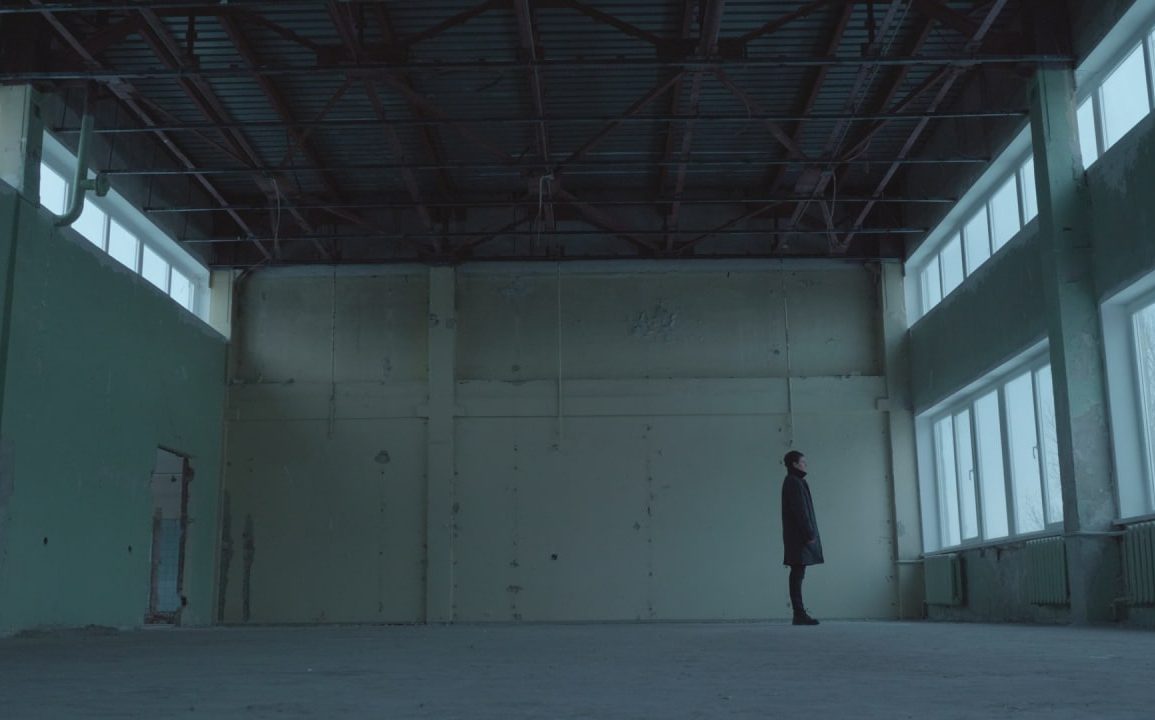
When you live day-to-day in a city dominated by heavy industrial architecture, endless grey manufacturing structures, and factory smoke stacks, you can’t help but absorb it. This dark, melancholic, and somewhat dystopian aesthetic gets right under your skin. It’s impossible not to be influenced by it, and it leaves a profound mark on the mood of the music I write. What’s special about the dreamers in my current locality? I think the defining trait is that the ultimate dream for many people here is to break out, to leave in search of a different life. My music, and this album in particular, is my own form of mental escapism — an attempt to break out of these industrial landscapes and retreat into my own inner cosmos.
What are your dreams for the next steps and evolution of your music?
I have absolutely no intention of standing still when it comes to exploring the musical landscape. This album opened a lot of new doors for me, and I will continue to evolve my sound, expand my sonic palette, and experiment. I’m incredibly excited to explore the intersections of different genres — blending the hypnotism of techno, the cinematic essence of ambient, the broken rhythms of jungle, and perhaps diving even deeper into IDM and downtempo textures. I already have some ideas cooking with the guys from Locked Radio for a potential release down the line, maybe next year or the year after. I’d love to piece together another diverse record that bridges drum & bass, jungle, techno, and dub-techno, because I love the dub-techno aesthetic. I’ll keep experimenting. Naturally, if opportunities arise to connect with other artists, it could be interesting to discuss. Though, by nature, I’m not a big fan of collaborations; I definitely prefer individualism and working solo. That’s just my artistic vision. But we will see what the future holds.
What are your dreams for the future of this planet and life as we know it?
As a father of two small children, I naturally think a lot about the future of this planet. But to be honest, it is incredibly difficult to make any long-term forecasts today. The world has become completely insane; events and times are changing at a breakneck speed, and we all see what is happening around us. There are so many global forces and moments that we simply cannot influence. Of course, on a human level, I deeply wish there were far fewer negative events around us, and much more joy, happiness, and unity. I wish this world peace, development, happiness, self-discovery, and new horizons to conquer. I want to believe that mankind will find the strength to preserve its inner light and compassion. And if my music can serve as a tiny island of peace and comfort for someone navigating this unpredictable global storm, then I know I’m not writing it in vain.
This dream is over. Is there anything you’d like to add or things we need to know before we wake up?
Before this dream-interview ends and we wake up, I want to say a massive thank you to you, Dave, for these incredible, thought-provoking questions. It is a true honor to share my story on the 1 More Thing platform. I also want to extend my deepest gratitude to the Drum Army crew for their unwavering belief in my music and for giving this album a proper home. And to all the “local dreamers” reading this: never let the daily grind, exhaustion, or the harsh landscapes around you extinguish your inner light. Keep dreaming, keep creating, and leave your own unique footprint. Thank you.
Tyler Frost – Music For Local Dreamers is out now on Drum Army