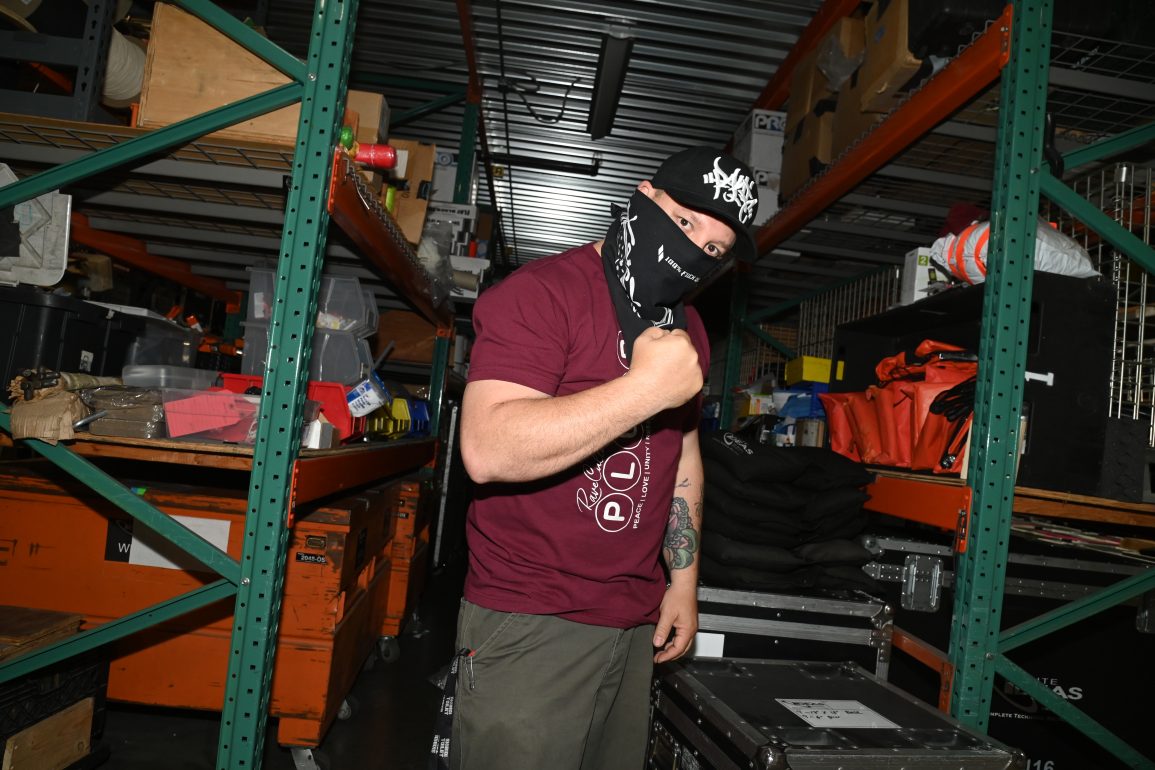
IlltechTheCutter is no stranger to 1 More Thing.
A regular contributor in our Demo Drop sessions, most recently he appeared on our Incandescent compilation we released in January with a gnarly, twisted slab of mutant jump-up called Th3 Brake. His sophomore release (following his debut last year on Current Value and Dean Rodell’s MCR imprint), it captured his raw, fizzy signature and his love for subverting standard arrangements. He even did a promo mix to help the release and got to showcase his chops as a turntablist (a discipline that runs deep in his history as a lifelong Stateside junglist)
Six months later, he’s levelled up once again with a release on BrainRave, an imprint very close to the 1 More Thing collective heart as it’s run and co-owned by Marc Chiz, a mentorship graduate of ours. Entitled Chemicals, not only is it Illtech’s most comprehensive and revealing body of work to date, it also shows a bold step into more experimental corners of the neuro movement BrainRave is currently at the forefront of.
From the nagging almost playground-like riff of the opening title track (which we guarantee will live in your brain rent-free for a long time to come) to the twisted flips and high voltage textures of the finale cut Path2Destruction, the whole EP feels fresh, exciting, unpredictable and a little bit dangerous. Which is fitting as you could describe IlltechTheCutter in a similar way. No other interview I’ve done has involved having a knife pulled out on me or involved a scary story about 10 men almost being paralysed while testing a rig for a Beatles legend.
Intrigued? You should be. Here’s where you can check the whole EP or read on and listen to the embeds as you take in the life, process and mindset of a unique US artist who’s pushing all the right boundaries and buttons for us right now.
Illtech The Cutter! what was the last thing you cut? And what’s your favourite thing to cut?
That goes without saying, it’s vinyl records. I practice every day still. I’ve been scratching since 1999. I got my turntables on December 13th, and that was when it began.
You can remember it down to the date?!
It was the first thing I ever bought for myself as a teenager.
And do you still keep those chops sharp every day?
Without a doubt. You never know when somebody’s going to call you out. The last battle I was in was the DMCs in 2014, in LA — that was my first DMC experience. But after that, life got in the way of pursuing it as a career, and I went into building stages and shows instead.
Do you build raves and dance events?
I don’t build raves so much — it depends on the budget. The companies I work for are mainly corporate.
Cool. I need closure on the cutting thing. Besides cutting tunes, what was the last thing you actually cut with a pair of scissors or a knife?
I always carry my knife for work — it’s beat up, dull as a spoon at this point. But I’m constantly cutting tape. Tape on cables, tape on cable trunks, tape wrapped around poles, tape on speakers. It always takes a knife tip to get it started so you can tear it. Here, this is my knife [shows knife to camera]
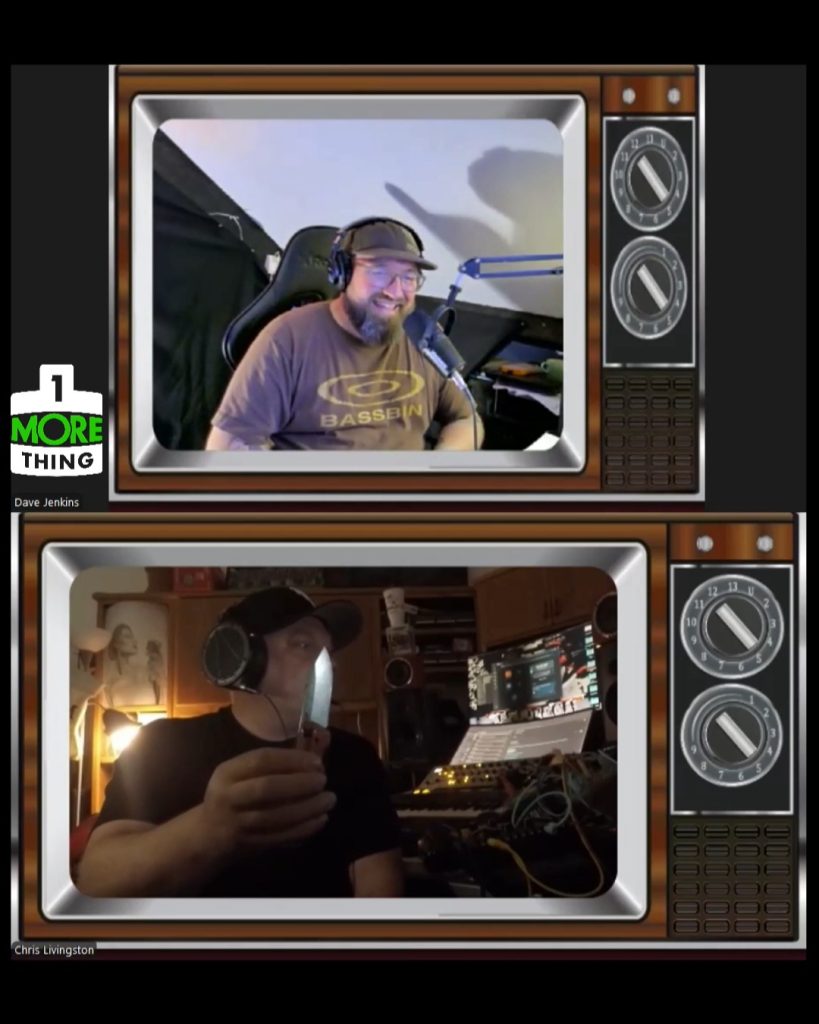
Woah, that’s a first. I’ve never had a knife pulled on me in an interview before! Glad it’s over Zoom. So, it’s been about six months since we last spoke and I released your track Th3 Brake on our Incandescent album. How have you been this year?
Really good. I landed a new contract with a large production company twenty minutes from my house. No more freeways into LA! It’s been a lot of work though. Yesterday was a 16-hour day with no breaks. In April and May I had a combined four days off. I’m the lead of the video department in the warehouse — officially “video specialist,” but really more of an entertainment technology specialist, because they can stick me in any department.
I guess you’re talking huge screens?
Yeah, I’ve got about a thousand 1000mm by 500mm LED tiles, plus another 700 at 500mm by 500mm — some Unilumen 2.6, if you’re in the industry you’ll know those.
I’m wondering — any of this connected to the World Cup? Have you got the World Cup fever?
Honestly, no. I didn’t even know how long a soccer game was until yesterday. Between production and kids I don’t have time for TV, and if I do, I’m playing video games. Sports take too much energy — all the names, all the stats, I don’t have time for that.
Ha, headspace! So what is your sport?
It’s all part of the discipline, really — production in all its forms. I know rigging for lights, I know electrics for show power, I’m an audio technician, and now a video specialist too — LED walls have been the main thing in shows for the last decade, so it was a natural progression. As for the World Cup — no involvement this year, but a crew I used to work with has the SoFi Stadium contract, so a lot of old coworkers are in there right now. I actually got to watch SoFi being built — I was one of the riggers on the Coliseum, building structures for whatever came through. That gave me the opportunities I have now as I cover the whole spectrum of show production. Now I’m adding warehouse operations on top, which is a whole new level.
So you’re responsible for the whole inventory. Sounds like a challenge!
It is — and the stressful part is on the way back out. We’re talking $100,000 control units with fifty pieces to one machine, and I have to check every single one. If they break it out in another city, or another country, and something’s missing, that’s on me.
Pressure! What’s the most intense, scariest situation you’ve had as a rigger?
I got to build Paul McCartney’s set for his last tour — well, the pre-production rig, in one of the giant Warner Brothers warehouse studios. We were putting up a 200-foot by 100-foot video wall and all the lights. There was a row of lights — forty of them, 1,000 pounds each, twenty in each row — and one of the rigging points wasn’t taken, so the whole system was sagging, smiling. The rigger below the head rigger told ten of us to grab it and hold it steady while it was lowered — 20,000 pounds, between us. I said it wasn’t a good idea, that if it fell we wouldn’t be able to hold it. He told us to do what we were told. We were pinched between the lighting carts — 700 pounds each, no room to move — with bars positioned right at the back of our calves and knees. If it fell towards us, it would’ve sat us down between the carts and broken our legs at the knee.
Damn!
Right? And sure enough, as soon as he released the points, it lurched forward, everyone overcorrected, and it started coming back on us. Ten seconds of life-or-death fighting while this guy’s hands were shaking, fumbling with the switches trying to get it to take weight. He dropped it further first, giving us even more slack, before he finally got it under control and lifted it. We were all shaking. The head rigger came around the corner, told that guy to get off his site for good, checked we were okay, and called the day. That guy never came back to that production. It was one of the scariest moments of my career — ten of us, and we probably wouldn’t have walked again.
And Paul McCartney was completely unaware?
He never left his trailer the whole time. Had no idea it happened.
Wow — so you never actually met him?
No. We were just hands, not part of the main production — once it was built, they shooed us away. But just being in the same building as that guy was substantial for me. You could feel it in the room.
Playing a role in a legend’s show, that’s amazing. And lucky escape from a scary situation. Right, let’s talk about your productions — it’s great to see this release, and I know we’ve had at least one or two of these tracks on the Demo Drop. It feels like, after two years of hearing your stuff come through, this is your most accomplished release yet — like you’ve really found your sound and technique. Would you say that’s fair?
Absolutely. Thank God I met Current Value — he took me under his wing and led me to where I’m at. Without him this wouldn’t have happened. I’d been spinning my wheels since 2007. For years nobody would tell me what I was doing wrong — everyone said it sounded like I was on the right path, that I could make music, but we all kind of knew something was off. Nobody who knew would speak up, and the people trying to help didn’t know how to fix it either. Music’s a puzzle — every song.
A very personal puzzle, too. And I think back then, before tutorials and shared knowledge became the norm, people guarded their production techniques much more closely?
Definitely. Especially in the early 2000s — it was all secrets and tricks of the trade. I understand why it was so competitive, especially in drum and bass — it was rough coming up as a junglist. What gave me credibility with everyone in the scene was that I could scratch and juggle, doing the hip-hop thing within drum and bass, and people thought that was cool. But eventually I realised being just a DJ wasn’t going to get me where I wanted to be. Most drum and bass DJs who wanted to go professional ended up doing corporate weddings, taking requests, playing music I can’t stand — and I’m pretty passionate about what I can’t stand.
You’ve got to stay true to your art and sound! How do you feel about that evolution?
It’s a dream come true. I’ve worked my whole life to figure this out, to put this sound down and have the world go, “yeah, that’s it, that’s that shit right there.” It finally happened — with you, with Current Value, MCR, Dean Rodell, and now BrainRave with Marc, Ian and the rest of the family. Talk about lucky — you don’t get much more blessed than that.
That’s amazing, and I love that we’ve played a part in it. I think about people’s reactions to your tracks on the demo drop. Current Value really put the key in the door for you, didn’t he. That path you’d been missing for years?
Absolutely. He asked me straight up, “what’s your deal?” And I told him — I can’t get an honest answer out of anybody, I know something’s wrong with my production, I just don’t know what. He said he’d tell me the truth about everything, including mastering. I didn’t believe him — I’d worked with other professionals before who still gatekept. But he wasn’t like that at all. He answered every question, no matter what. He confirmed I was on the right track but showed me how to actually do it.
Amazing, and the Chemicals EP is really an embodiment of where you’re at now, your most accomplished EP. For context for anyone reading — I mentored Marc for 18 months and it’s amazing to see him develop, and now he’s flourishing as a label owner, doing things better than I ever did. What’s it like working with BrainRave at the moment?
Honestly, I couldn’t think of a better group of people to work with. My production finally started getting through to the label heads for proper feedback, and once that started, a few contracts came through that made me go, “what is this, I can’t sign that.” Then BrainRave’s contract came through, and that’s really when you see who someone is — it read as a supporting contract, basically saying “we’ll make sure you get the larger portion of everything, because it’s your production, we’re just here to help it reach people.” That gave me the respect I needed to feel comfortable handing over everything, contract or not. Some other labels were the opposite — basically trying to burn me down for everything I’d worked for. That blew me away, and it sucks that’s how some of them work.
It really is a shame. So much hard work goes into running a label, way more than people realise, for such little return. But it feels wrong to exploit the people actually making the magic when we’re all supposed to be on the same side. Labels like BrainRave are about getting music out and helping the scene flourish — supportive, not exploitative. Here’s a thought; you’re dealing with American, European and UK labels. As an American producer working in a largely European/UK sound, do you see real differences in how artists are treated depending on territory?
America — what can I say. I wish Americans supported each other more for the right reasons. The scenes here are small, there’s not a ton of money in it apart from a few outfits with bigger budgets who can afford the big names. Because it’s small and everyone wants a piece of the same pie, there’s a lot of territorialism. Guys like Ed Rush get treated like gold, deservedly — but we’ve got people here at that level production-wise who get no credit at all, and producers like me have to go to the UK, Germany and beyond to get any kind of recognition. Meanwhile there’s a label right down the street — Schedule One, an awesome collective putting out some of the best music — and I never saw those guys get put on bigger shows. N2O is another one. They could have dominated, but it fizzled because of territorialism between crews, and eventually the poison within their own crew took them down. N2O Records, Oxide Entertainment, Free Burning Records — all gone. They were close to landing tours with acts like Slipknot — DJ Starscream put records out on N2O. That was my first crew, in a sense. Then it all fell apart because of greed. That one person who wants it their way and won’t share, which ends up excluding everyone who actually deserves to be there. That’s basically why drum and bass in America hasn’t grown as big as it could — competition and territorialism, on top of it being a small scene with high costs to bring acts over from Europe.
That’s really interesting — that competitive spirit is part and parcel of American culture, the American dream and all that. It can be a great spark for creativity, but it takes that one bad apple, that element of greed, to sour it. The most extreme example right now is probably Elon Musk, about to become a trillionaire off the back of floating SpaceX. Nothing stays good forever, does it — it always seems to decay or lose its spark eventually. That’s a bit of a tangent, but it leads me to this — one of my favourite tracks on the EP is called Path2Destruction, and it kind of fits with what we’re talking about, because watching America right now, sending people further into space than ever with the Artemis mission, hosting the World Cup, all this — but also some genuinely troubling stuff going on at the same time — it does feel like humanity is on a path to destruction in a lot of ways, doesn’t it?
I mean, yes — but I’m 45, and it’s been presented to me since I was young that we’re living in the end times, so it’s kind of par for the course. Whenever a species is getting ready to leave a planet, things get chaotic — that’s what we’re preparing for, to go seed somewhere else in the universe. So yeah, it does seem like we’re headed towards destruction. But I don’t mean the world is on a path to destruction — I think it’s more that the individual is. You see so many people letting fentanyl and drugs take them away from the people they love and destroy their families. Opiates have been called the killer of nations for centuries — it’s a tool for war.
And on the bigger picture — the world is full of bad humans, on both sides of any divide you want to draw. It’s our job to acknowledge that and just try not to be one ourselves. That’s probably the biggest lesson I’ve learned in my life. I grew up in group homes from age 12, basically on my own since then — it was fight or flight, I was fighting for my life, and there was nothing I wouldn’t do to make sure I was okay. Eventually I realised I was hurting people to make sure I was okay, and that wasn’t okay. That’s what grew me into who I am now — I try to take care of my people the best I can, and that’s why I work as hard as I do, to be the best I can be for the people I love who support me.
That’s a brilliant answer, way better than I expected — that was actually going to be my next question, where do you find light, but you’ve already answered it. That’s exactly it — self-improvement, constantly developing, being true to yourself. Really the interview should stop there but I need to ask you one more thing… Your EP is called Chemicals so what’s your favourite chemical?
Ooh, throwing a curveball — denatured alcohol. It’s a great cleaning agent — we use black Sharpies to label our gear cases, and a spray of that with a rag and the marker’s gone.
Ha, amazing. Now — what comes after Chemicals? Are you already working on the next batch?
Glad you asked — the Chemicals EP is basically me pushing my computer to absolute breaking point. It can’t even open those sessions and play anymore, it just chokes. So I’ve slowed down on making beats and I’m working towards a new machine. I told my wife I wouldn’t get another computer until I got signed. Well, I got signed by three labels this past year, so that’s happening and I can’t wait to get a machine that’ll actually let me work properly. So stay tuned, because what it always comes back to is that I love the sound, and what it does to me. I need to hear something I’ve never heard before, feel it connect, feel like I need to get up and rock out — that’s what I love about drum and bass. The darkness is something we’re constantly drawing from.
It’s another colour to paint with.
Exactly — and it’s not something to be afraid of, it’s got its own beauty. Inside the light and the dark is where you catch all the shadows that make us who we are, and this EP is the sound of light and dark colliding. I love it — if I didn’t have drum and bass, I wouldn’t be me.
IlltechTheCutter – Chemicals EP is out now